A COVID Inmate

Photo by Xiaoyi

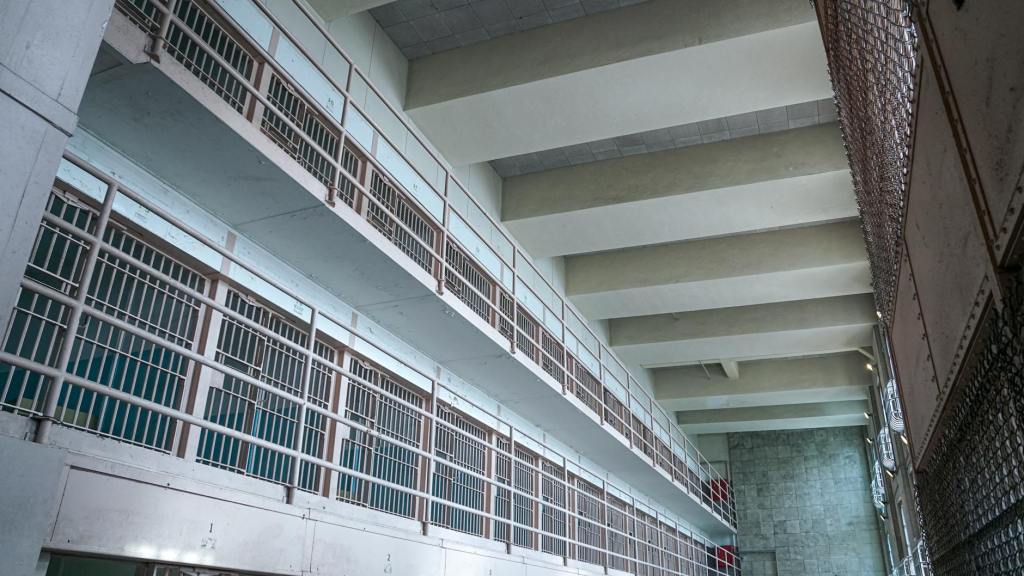
She was arrested the Friday before the Monday when we were sent back home from the office. She would spend the next three months in a cell up north, waiting to be transferred to Louisiana. Louisiana had the reputation of being an overcrowded prison, where the inmates passed their days reading the same books and sweating in the humidity. But nothing was worse than up north. 

The COVID measures called for the inmates to be socially distanced, so the guards would let the white women roam freely on the high-ceiling patio while she and the other women of color waited inside their 6-foot cells. Some women had stolen vehicles and trafficked drugs, but there was no worse crime than crossing the border without the proper paperwork. She was deemed more «dangerous,» so she was also denied the books and the menstrual pads. 

There were no visitation rights or paper letters, and she would wait every day for my call. The call was her only chance to escape confinement, but at 15 dollars per 30-minute phone call, nobody could afford more than one a day. On the phone, she would cry the whole time, and I would wait for her to stop with nothing to say. 

I would google her stories all day at work, as they were hard to believe. And then, when the afternoons came, I would sit down staring out the window with my bubbly beer until night. I was alone without her, and my infinite rage made me hopeless. I wrote her 72 letters that were never sent in the solitude of the travel bans, the closed restaurants, and the shutdown of offices.  

One morning, I received the news that she had been transferred. My heart bloomed with joy, knowing she was closer to being finally deported. It’s strange what the heart ends up wishing for. 

I cry for her to this day because I know I’ll never see her again.

The Color of Shame

It was one of those fun events at work where you go to a cheap restaurant to socialize with people you couldn’t care less about. As my mind drifted away between conversations, someone asked me about my wedding dress. I said, “It was purple.” Their stares and raised eyebrows were directed at me. 

The truth is it was just a purple shirt with black leggings, as I couldn’t fit into anything else at 8 months pregnant. My wedding had been at the notary public a few months after I had told the father of the child I was pregnant with his baby over a Skype call. He was always traveling for work, and we’d hook up when he was in town every now and then. Eventually, the incredulous man had given up his resistance after my dad put his foot down.  

At the wedding, we sat next to each other with my parents as witnesses, and we vowed to stick together and some other nonsense. The reception wasn’t much better. It was a sad crowd of old aunts, cousins, and relatives I had hardly seen. No friends. My mom had made it clear this wasn’t a party for me. It was a save face, a charade for the virulent tongues out there. 

We stuck together for five years. Just enough to keep the comments at bay. I raised the child alone while he kept traveling and hooking up with random girls in every town. No emotional support from anyone, not from him, not from my mom. The child is now growing as the product of divorce, of an absent father, of a loveless marriage. But who cares? What counts is that we were married. 

I snapped out of my thoughts. The stares continued. And I said, “I was joking. My wedding dress was white with a beautiful boat neck bodice…” and I kept going until their smiles were wide.

Ni cielo ni infierno (English – Español)

English version

Cuando estaba en la universidad, salía a protestar contra la política imperialista de los Estados Unidos. En marchas de miles, gritábamos: “Fuera Yankees de Colombia”. Estábamos cansados de una política que restaba soberanía a nuestro país y nos fumigaba con veneno. Por eso, mudarme a los Estados Unidos significó, en cierta medida, una traición a mis ideales. 

Hoy, tras diez años, puedo decir que mi perspectiva de los Estados Unidos ha cambiado poco. Ahora, estando adentro, conozco de primera mano sus inconsistencias. Hay personas y situaciones que me hacen voltear los ojos. Es un país contradictorio que tiene una perspectiva salvaje del libre mercado. 

Pero al hacer el balance de estos diez años, también puedo decir que a pesar de todo los Estados Unidos me han tratado bien. He logrado cosas que pensé jamás lograría y otras de las que siempre tuve convicción. Aprendí un segundo idioma y a conducir un auto. Hice nuevas amistades con personas tan distintas como mis gustos musicales. Subí en el escalafón profesional y voy camino a graduarme de un doctorado. Compré una casa y he viajado a muchas ciudades. Mi hija crece con amor y oportunidades. 

No siempre ha sido fácil. Al partir, dejé atrás el amor de quienes me querían y rompí lazos que se habían formado con el tiempo. Llegué con tres maletas y menos de 200 dólares en el bolsillo. Tuve que empezar mi carrera de nuevo porque mi experiencia pasada ya no valía. Lloré en noches heladas en la oscuridad de Nueva Inglaterra. Enfrenté un choque cultural que me dejó claro que nunca perteneceré a este país donde tengo la piel oscura y mi idiosincrasia se menosprecia. Perdí un empleo en el país de los despidos masivos. Y he tenido que probarme a mí misma minuto a minuto. 

Hay días en que es claro que vivir en los Estados Unidos no es el infierno, pero tampoco el cielo. Y hay otros días donde no es el cielo pero tampoco el infierno. No me siento atada a este lugar ni le debo lealtad. Pero, en cierta forma, siempre agradeceré el haber vivido esta experiencia. 

Hoy escribo con amor para los amigos que me quieren y la familia que me ama. Los de aquí y los de allá. Los cheerleaders que me dieron fuerza en los momentos más difíciles. Escribo para los que extraño y para los que veo cada día. Por todo esto, doy gracias. 


Neither Heaven Nor Hell

When I was in college, I used to protest against the imperialist policies of the United States. Thousands marched and shouted: “Yankees, out of Colombia.” We were tired of its policies that took away our country’s sovereignty and fumigated us with poison. Moving to the United States meant, to a certain extent, a betrayal of my ideals. 

Today, after ten years, I can say that my perspective on the United States hasn’t changed much. Now, being here, I know its inconsistencies firsthand. Some people and situations make me roll my eyes. In many ways, it’s a contradicting country that has a savage take on the free market. 

But when I take stock of these ten years, I can also say that, despite everything, the United States has treated me well. I have achieved things I thought I would never achieve and others I always had conviction about. I learned a second language and how to drive a car. I made new friendships with people as diverse as my musical tastes. I climbed the career ladder and am on track to complete a doctorate. I bought a house and have traveled all over. My daughter is growing up with love and opportunities.

It hasn’t always been easy. When I left, I left behind those who loved me and broke ties that had been formed over many years. I arrived with three suitcases and less than 200 dollars in my pocket. I had to restart my career because my past experience was no longer valid. I cried on freezing nights in the darkness of New England. I faced a culture shock that told me that I would never belong in this country where I have dark skin and my background is belittled. I lost a job in the country of mass layoffs. And I’ve had to prove myself every minute. 

There are days when it’s clear that living in the United States isn’t hell, but it’s not heaven either. And there are other days where it isn’t heaven but not hell either. I don’t feel tied to this place nor do I owe it loyalty. But in a way, I will always be grateful for having had this experience.

Today, I write with love for the friends and family who love me. Those from here and those from there. The cheerleaders who gave me strength in the most difficult moments. I write for those I miss and for those I see every day. For all this, I’m grateful. 

Rico: A Layoff Chronicle

“I really want to live a life of stories… A life worth retelling,” he tells me when I ask him about his changing career. Although he has never finished any of them, he has “giant stories” in his head. He lives to tell stories. And stories he tells me. 

Rico talks fast and continuously, and politely pauses when he sees I struggle to keep up with the notes. We don’t record this conversation because there is just too much in it. Rico was laid off from a job he had held for several years, and the emotions still run high for both of us. 

While in college, he competed in an oratory contest and wrote a speech about graduating. His winning speech talked about winding paths and doing what we weren’t expected to do. He talked about reaching the end of life with very good stories to tell: “When faced with the safe choice and the crazy choice, choose the crazy, so you have a crazy story.” He continues, “I didn’t jump into the world with an idea of what I was going to do.” But, for sure, he wants to “do more than just wake up in the morning, go to work, and clock out” for the rest of his life.

His career proves he’s been choosing the crazy option since graduating. He worked at a restaurant and a bar. He worked at a university and a luxury homeware store. He dug archeological sites in some forgotten places in the world. He worked as a mailman. He’s done the weirdest jobs. 

I ask him which of these experiences is the most significant, and he chooses two. The first one he chooses is when he worked for the luxury homeware store. There, he tried to play the part of being “fancy and luxury.” He worked really hard to look the part, but, in the end, he was still fired. Rico realized that there was no point in not being authentic: “If some place doesn’t want me for me, I don’t want to be there.”

The second experience is the time in his career when he was unemployed for a year and a half. It was his first time being laid off: “It came out of nowhere, and I wasn’t mentally prepared for it because I hadn’t experienced it before.” His wife was a graduate student at the time, and they had a 2-year-old. With no income and student debt, they used all their savings and took on welfare, and they went down to 1,000 dollars in their account. It was a terrible experience, and he felt worthless. 

Eventually, Rico got a job at a restaurant even though he had no experience. He was still given the job, as he was able and willing to learn. Having that opportunity “of being able to join funny, weird, dedicated people was a turning point.” He shares that he learned “how to feel wanted, needed, and validated. It helped me see how I fit into other places and can be accepted.” 

Since he touched upon it, I ask him about being laid off. “How do you feel now?” I ask. As upsetting as it was, he sees the silver lining: “I don’t agree from a conceptual standpoint. I don’t think it was a good choice to lose all these people… But I think change is a good thing. [This job] was golden handcuffs, and I see [this situation] as the universe kicking me in the a** and saying that I have to try something different.”

He adds that the toughest part of being laid off is separating the value judgment of the self and the particular job one did at the company: “Maintaining a sense of self is the hardest part. The first time I was laid off, we really struggled. I broke down because I couldn’t get a job or an interview, and I felt incredibly worthless”. Rico explains that it feels sometimes as if your job is your worth. So when you have no job, you feel like nothing: “You still feel like your entire worth is being called into question. You have to recognize that you aren’t the role you lost and that you are a worthy person. You’ll struggle with that regardless.” 

To this last layoff, Rico adds the difficulty of dealing with a sense of betrayal. He thought differently about his last place of employment, so he felt like his trust had been betrayed. Now, he is trying to “come to terms with the fact that I am so angry and frustrated about it. I am working through the emotions.”

I see myself reflected in his feelings, so I ask about how he copes. He shares that he tries to cope by letting life happen. Part of that is letting interesting opportunities appear and chase them from there, instead of trying to force something: “Letting myself have the headspace to identify a nice opportunity, have serendipity, and let weird things happen.” Then, he shares that he tries to enjoy the fun that comes with unemployment, like watching TV or playing video games. This prompts me to ask: So how do you feel about work, anyway? 

Rico responds: “No one is going to choose work over vacation. But work can be nice if we enjoy ourselves.” He continues, “Work is one of those things that gets a bad rap. Too many people don’t try to have fun at work, and that is the most important part.” Work is a necessary thing, so he tries to find things that are enjoyable and interesting and to solve unique problems that are meaningful. He shares that some of his goals at work were to build a good rapport and to make sure people were smiling and laughing “because if we aren’t having fun, what is the point?” (Yes, Rico might have sworn there.) 

It is close to an hour, and I ask my last question: “What would you like businesses to know about laying employees off?” Rico doesn’t hesitate: “Companies need to recognize that there is inherently a feeling of betrayal that comes with this. You are given no intimation that that is going to happen. We understand they don’t want it to come up, but there is a betrayal… It is hard to turn around and pretend everything is fine.” 

He continues, “Workers pay the price for poor leadership decisions, and they can see this. They aren’t blind. For example, people at Barstool Sports were laid off, but the leader just bought a 42-million-dollar mansion. So he could lay all these people off for a bad decision, but face no consequence.” Leadership and companies need to know that people see this happening, and it doesn’t look good no matter how many NDAs are signed. 

*Rico’s name has been changed to protect his privacy.
I only have one photograph of him left

I only have one photograph of him left. I took it when he came to our house in one of his striking, commonly nocturnal, never-expected visits. The photograph is a portrait of a young man in decadence who had been living beyond the line for more than a long time.

He was no longer that joyful, peaceful boy that all of us used to know so well. His strange manners and compulsive movements, combined with his thinness, gave him a repulsive appearance that was not bearable for long. He looked like a walking bag of bones, and his long hair partially covered his cheekbones, which stuck out giving to his face the look of a skull just covered by skin. He seemed like a puppet of a skeleton that moved because of the action of a strange force…lifeless.

All of his body looked lifeless but his eyes… His eyes were strangely deep. They were black and deep as the universe, full of energy that hypnotized and frightened. One could see through his eyes. At some point, he stared at me and laughed and talked like a maniac. I stared at him too while wondering how this could have happened. I was mesmerized by the image, and then I took the photograph.

He left soon that night, and it was the last time we talked. Sometimes, I look at the photograph and wonder if I could have helped him, but I knew he would never come back. He always said that he wanted to be free.